 |
| Source: econofact.org
The topic of minimum wage is very controversial right now, but if you asked a minimum wage worker if they wanted to make more money, it wouldn’t be very controversial at all. Minimum wage workers want more money for their work, but do they really deserve it? The question of raising the minimum wage is really a balance between moral and economic views.
Proponents of Minimum Wage: Ethical Moral Arguments
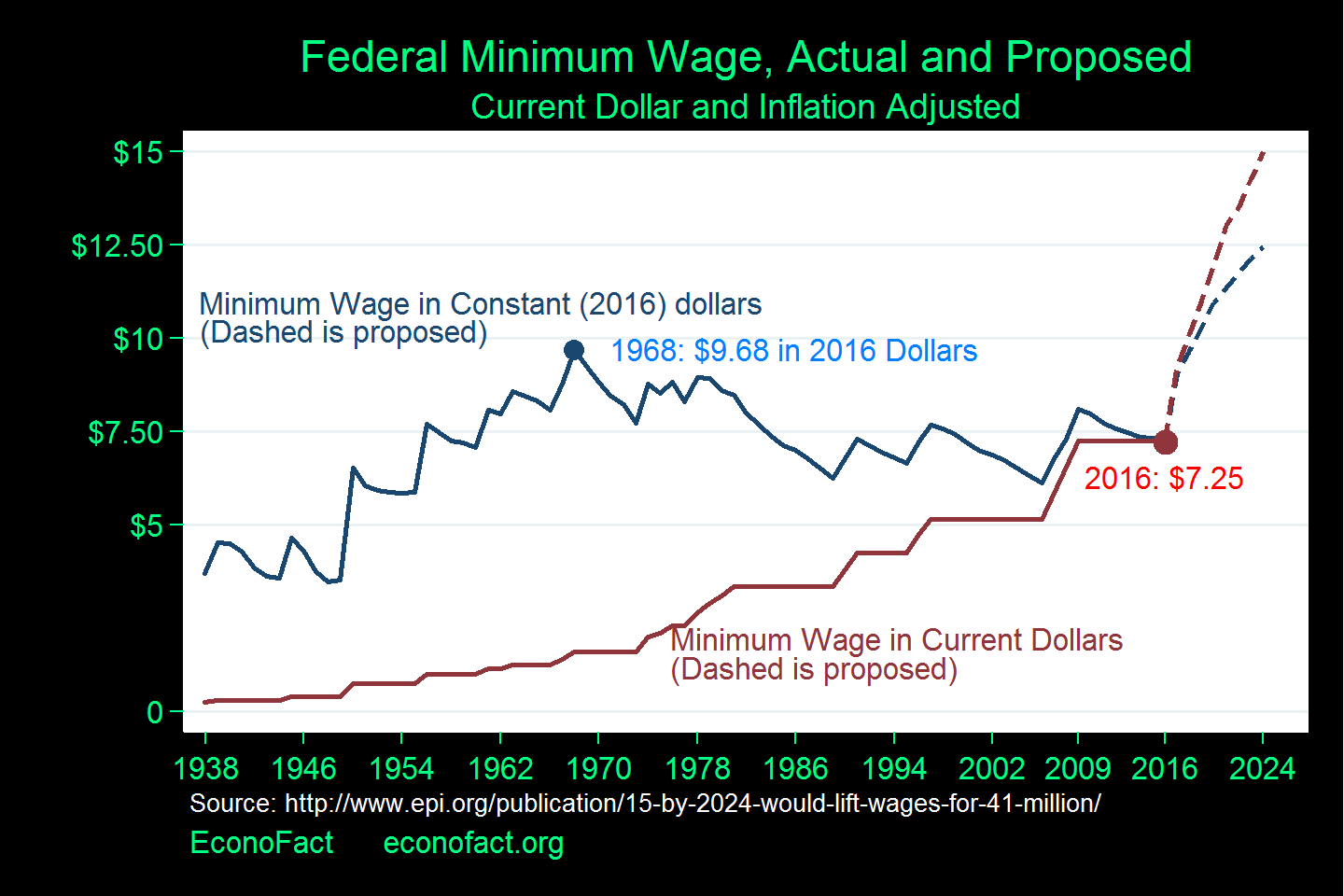
Supporters of raising the minimum wage are focused on pros that support the ethical idea behind higher wages. The Balance, a leading source of personal finance and career information, argues, “minimum wage has not kept up with inflation and that many minimum wage workers are impoverished”. They believe that the value of the dollar and the minimum wage do no longer correspond because the value of the dollar has decreased while the minimum wage has remained nearly the same. Since what the workers make is of lesser value than what it should be, it makes it very hard to live off of.
The Balance also argues “government expenses for social programs aimed at the poor would potentially be reduced. This might result in slightly lower taxes for other Americans” raising the minimum wage would put more money into the workers pockets so that they could afford to buy healthcare directly instead of through government programs. If there were to be less people on government regulated social programs, then taxes could potentially decrease for the rest of the American population.
Another argument in favor of raising the minimum wage is “it will help workers make ends meet and reduce inequality, improve child health and education outcomes, and stimulate the economy with more purchasing power for low-wage workers”. Raising the minimum wage would help to eliminate inequalities between the poor and the rich. Children of poorer families tend to avoid essential health services and often tend to go to bad schools because their families can’t afford to live in a nicer neighborhood.
If workers were paid more, they’d have more spending money, and therefore stimulate the economy. These reasons all seem to be fair for everyone, so they are the most ethical way to go about solving the question revolving around raising the minimum wage.
Opponents of Minimum Wage: Economic Arguments
Opposers of raising the minimum wage are focused on cons that involve hurting the economy and employers. The Balance explains raising the minimum wage “will put a burden on employers, especially small companies, resulting in slower growth and decreased levels of employment” and because of that “employers might hire fewer workers in the entry level jobs needed to begin a career”. This not only hurts the employer but the employees as well. Sure the employees would make more money, but they’d also have a harder time finding a job to provide them with the high wage.
Raising the minimum wage also “raises the incentive for companies to outsource labor to countries where minimum wage rates are lower”. So, not only are they losing jobs to their co-workers or equal counterparts, they’re losing jobs to people abroad. When companies choose to outsource labor to other countries they are hurting the American economy. To have a surplus of demand for jobs when the supply is low and a bad economy will definitely not help low skilled workers.
Raising the minimum wage would not likely put more money into the pockets of the people, and if it did, it would be temporary. The people that were lucky enough to find a job with the higher wage will end up paying for all those that lost their jobs in taxes. It is not possible to provide a higher minimum wage, increase jobs, and lower taxes all at the same time, something has to give.
Future Question: Is the EITC a viable alternative to raising the minimum wage?
|
Friday, October 20, 2017
What are The Pros and Cons of Raising the Minimum Wage on Workers

Subscribe to:
Post Comments (Atom)
-
SOURCE: www.kickstarter.com The United States has had many different types of environmental regulations since we became a country. Ove...
-
 https://www.theverge.com Iphones are known for their prestige cameras, but when you compare them to a DLSR, how good are iPhone ...
 -
SOURCE: Hit the Trail Created in 1849, the Department of the Interior is the U.S. federal executive department responsible for ...


No comments:
Post a Comment
Note: Only a member of this blog may post a comment.