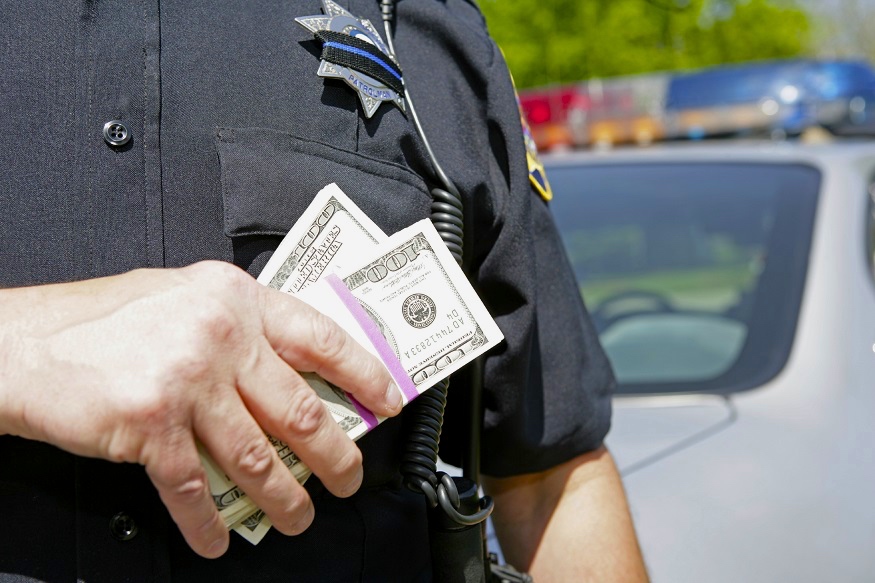
I’m sure you’ve heard the myth that cops are required to write a certain amount of tickets each month in order to keep their jobs. Although this myth has been confirmed fake by almost every department, there are other ways departments try to increase the size of their budget. Some aren’t as ethical as one would hope, which is concerning to hear since these agencies are supposed to represent the highest level of integrity, and justice. This blog will review such unethical, revenue-generating practices used by the police and to what degree these programs are being used to compensate for budget cuts.
According to a Washington Post article titled “Stop and Seize” by Michael Sallah reviews the common practice among law enforcement agencies that allows an officer to seize a citizen's money if they have a suspicion the money is connected to a crime. Of course, this has been abused. The author has stated:
There have been 61,998 cash seizures made on highways and elsewhere since 9/11 without search warrants or indictments through the Equitable Sharing Program, totaling more than $2.5 billion. State and local authorities kept more than $1.7 billion of that while Justice, Homeland Security, and other federal agencies received $800 million. Half of the seizures were below $8,800.
This shows us that a lot of money is being generated through this money seizure law, which is used by countless local, state and federal agencies. What was originally a way to combat gangs and drugs lords, is now being used on the average citizen. It’s apparent that this program is extremely effective too since it has generated billions in revenue despite the fact that the average seizure is so small.
Another statement in the article claims that “ 298 departments and 210 task forces have seized the equivalent of 20 percent or more of their annual budgets since 2008”. This suggests that a lot of departments have a heavy reliance on this program to increase their budgets. So you can imagine that programs like this would only increase during times of budget cuts as a last stitch effort to prevent changes in spending.
In summary, we have learned that most agencies use cash seizure laws to increase their annual budgets and would increase said programs to counteract budget cuts. My next research question will deal with what sort of restrictions are placed on the police when it comes to spending.


No comments:
Post a Comment
Note: Only a member of this blog may post a comment.