 |
| Source: cbpp.org
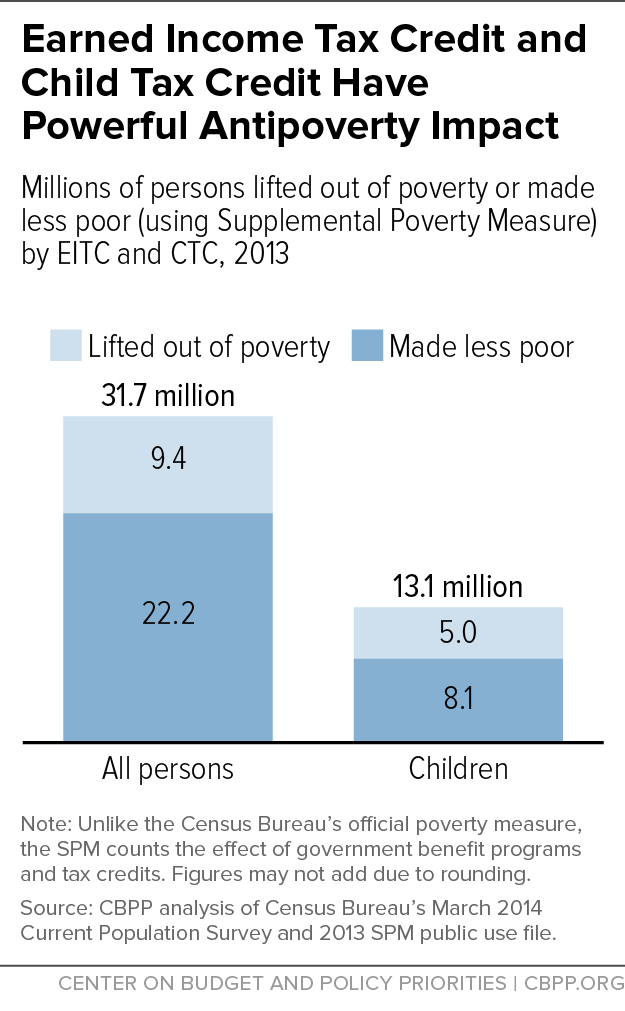
The question of raising the minimum wage is highly debated, but the question of raising the EITC isn’t. The EITC is the earned income tax credit which is a anti-poverty tax credit that the federal government has enacted to allow low wage workers to keep more of what they make. The argument surrounding the EITC is would it be supplemental enough for the low wage workers AND at the same time keep taxes and inflation down for the common man. If the EITC is capable of this, it would be considered an alternative to raising the minimum wage up to the insane amounts people demand.
Arguments Against Expanding the EITC
One problem with the EITC mentioned in TIME, an American weekly newsmagazine, is that the Earned Income Tax Credit is a public funded program which means “Taxpayers must foot the bill”. Even though most Republicans support the idea of the EITC, if the program was expanded vastly and taxes increased dramatically, it would lose much of its support.
Likewise, another problem found with expanding the EITC is the possibility of it hurting the overall economy. An article about the “Small Benefits, Large Costs” of the EITC published on Reason, a “monthly print magazine of ‘free minds and free markets.’”which covers politics, culture, and provocative ideas states “Paying for the EITC requires the extraction of resources from the productive sector of the economy. This causes people to reduce their productive activities, such as working and investing, which in turn hurts the economy”. Paying for the expansion of the Earned Income Tax Credit would make people worry because of the transfer of funds, which in turn would make them greedy to prepare for future financial uncertainty. At this time people wouldn’t work as much so they could collect more supplemental income from the government and wouldn’t invest because it would show that they have excess wealth.
Arguments for Expanding the EITC
One reason people supports the EITC is because of its possibility of reducing and possibly solving overall poverty. An online article by Center on Budget and Policy Priorities (CBPP), a group that researches federal and state policies regarding poverty, states that the EITC will in fact “reduced current poverty and inequality in at least two ways (1) by supplementing the wages of low-paid poor or near-poor workers; and (2) by encouraging work”. Supplementing the wages of low workers help them afford necessities and gives them a chance to better themselves by relying less on other government programs. Low wages don’t encourage many poor people to work because they wouldn’t make as much as they need to live off of anyways, so why work at all? Expanding the EITC would increase incentives for people in poverty who work.
Another reason many people support the EITC is because it largely benefits families in poverty. Extremely poor families that do not receive the Earned Income Tax Credit or not enough of it tend to find that their children do poorly in school and end up later in life in that same position they grew up. Its proven that “children in families receiving the tax credits do better in school, are likelier to attend college, and can be expected to earn more as adults” (CBPP). Children whose families receive supplemental income from the government are more likely to receive the things they need to succeed and fight their way out of poverty as adults.
Recap
It would be more beneficial for the U.S government to expand the Earned Income Tax Credit instead of minimum wage because it is more cost effective and benefits only those who truly need the extra help.
Future Question: Who does minimum wage affect the most?
|
Thursday, November 9, 2017
Is the EITC a viable alternative to raising the minimum wage?

Subscribe to:
Post Comments (Atom)
-
SOURCE: www.kickstarter.com The United States has had many different types of environmental regulations since we became a country. Ove...
-
 https://www.theverge.com Iphones are known for their prestige cameras, but when you compare them to a DLSR, how good are iPhone ...
 -
SOURCE: Hit the Trail Created in 1849, the Department of the Interior is the U.S. federal executive department responsible for ...


No comments:
Post a Comment
Note: Only a member of this blog may post a comment.